
Underbody vs. Front-End Dump Truck: Which One Is Right for You?
Underbody vs. Front-End Dump Truck: Which One Is Right for You?
When choosing a dump truck, most of us usually pay attention to such specifications as engine power, carrying capacity, type of axle, size of the dumping body, and cost of the vehicle. Yet, there is one more characteristic which may influence the performance, serviceability, and usability of the truck for certain tasks — the hydraulic system of tipping.
There are two types of tipping systems — the underbody tipping system and the front-end tipping system.
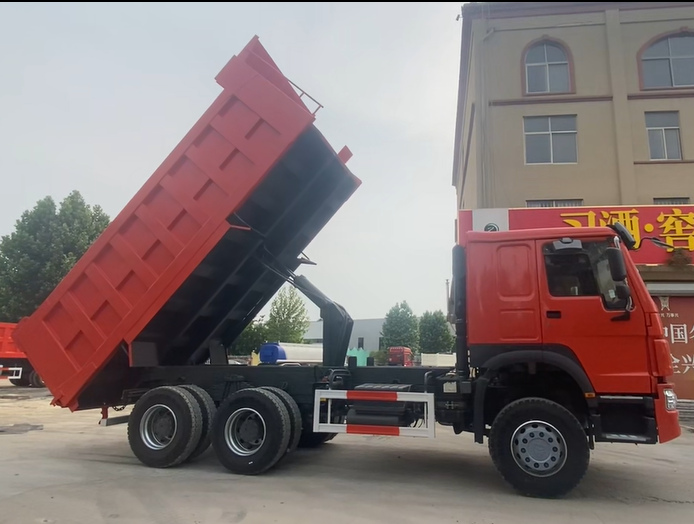

So, what is the difference between an underbody dump truck and a front-end dump truck? Does the front-end cylinder mean better performance with heavy loads? And what type is more appropriate for construction, hauling sand, quarrying, or mining?
This depends on the load and size of the dump body and even place of operation.
Let's find out.
Underbody Dump Truck Definition
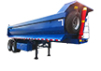
The underbody tipping system involves having the hydraulic tipping mechanism below the dump body.
Once the driver activates the PTO and the hydraulic system, the cylinder lifts the body upwards from beneath while the dump body tips off at the rear hinge point. The cargo is then tipped out via the rear part of the body.
Since the hydraulic tipping mechanism is mounted below the body, this is a relatively smaller system and is widely used on many medium to heavy dump trucks.
The underbody tipping system can be used to move the following materials:
Sand
Soil
Gravel
Aggregate
Construction materials
The actual lifting capacity of this tipping system is determined by the size of the hydraulic cylinder, mounting configuration, hydraulic pressure, and size of the dump body.
Front End Dump Truck Definition
The front end dumping is designed using multi-stage telescopic hydraulic cylinder located in front of the dump body, near the cab.
When unloading, the telescopic cylinder is extended vertically to lift the front part of the dump body. The dump body tilts from its rear hinges up to the desired degree of tipping angle.
The design is prevalent in heavy-duty 6×4 and 8×4 dump trucks, particularly those that have relatively larger or longer dump bodies.
Popular uses of front-end tipping system include:
Quarrying
Heavy construction activities
Earthmoving projects
Transportation of sand and gravel
Construction of infrastructures
This explains why people buying heavy-duty dump trucks in Africa face front end tipping systems.
Underbody vs. Front-End Dump Truck: What Are the Main Differences?
Although both systems perform the same basic function, their structure and ideal applications are different.
| Comparison | Underbody Tipping System | Front-End Tipping System |
|---|---|---|
| Cylinder location | Under the dump body | At the front of the dump body |
| Typical structure | Underbody hydraulic mechanism | Multi-stage telescopic cylinder |
| Space behind cab | Less required | Required for cylinder installation |
| Short dump body | Very suitable | Suitable |
| Long dump body | Depends on system design | Generally very suitable |
| Heavy-duty applications | Suitable when correctly specified | Commonly used |
| Mining and quarrying | Application-dependent | Common choice |
| General construction | Very suitable | Very suitable |
| Component exposure | More components underneath | Main cylinder positioned higher |
| Maintenance access | Depends on chassis layout | Main cylinder is relatively visible |
| Purchase decision | Best based on body and application | Best based on body and application |
One important point should be emphasized: The position of the hydraulic cylinder alone does not determine how much weight a dump truck can carry. Payload capacity depends on the complete vehicle, including the chassis, axles, suspension, tires, dump body, subframe, hydraulic system, and powertrain.
Which One Has Better Stability While Tilting?
Both trucks are not "rollover-proof" designs.
While raising the dump body, the center of gravity of the truck will rise significantly. It is more risky when:
The truck stops on uneven ground
One part of the truck sinks into the ground
The cargo is poorly balanced
The material sticks to one side of the truck
The tires of the truck have different pressure
The truck is overloaded
The driver tries to tilt the truck on a sloped surface
The hydraulic system can contribute to safe lifting, but for successful tilting the ground, the state of the truck, and driver skills matter too.
In construction or mining conditions, the truck must be stopped on stable and relatively flat ground for tilting operations.
Which Tipping System Is Easier to Maintain?
Both tipping systems need maintenance at regular intervals.
The important aspects of inspection are:
Hydraulic oil quantity and quality
Seals of cylinders
Hydraulic hoses
Oil leakage
PTO
Hydraulic pump
Mounting of cylinders
Subframe
Hinges of rear
Body distortions
Unusual body movements while raising and lowering
In case of second hand tipper trucks, these points must be checked prior to their refurbishment and re-checked prior to delivery.
The hydraulic system should have smooth movements without any abnormal vibrations and leakages.
Which Dump Truck Should I Choose?
There isn't one answer for all customers.
In case you transport sand, soil, aggregate, construction materials and have a small or medium size dump body, an underbody tipping system could be a perfect choice for you.
In case you are looking for a 6×4 or 8×4 heavy duty dump truck for quarrying, mining, earthmoving or any other hard construction work and need a long dump body, it is usually believed that front-end telescopic tipping system is needed.
However, it is important to remember that the hydraulic system cannot be chosen independently from the truck.
Before choosing the type of dump truck, there are four questions that you have to ask yourself:
What will be the material?
How many tons will you have to transport in each run?
What are the dimensions of the dump body?
Will the truck work on a road, at construction site, quarry or mine?
And after answering those four questions, the choice of tipping system will become much easier.