How Much Do You Know About The Dump Truck?
How Much Do You Know About The Dump Truck?
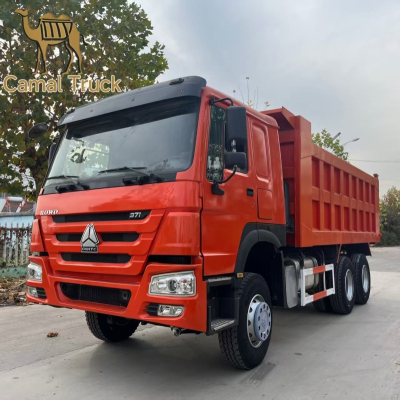
A dump truck, also called a tipper, is a very important special vehicle using its own power to drive a hydraulic lifting mechanism and automatically unload goods in the cargo bed and then come back to the original position.

The main role of dump trucks is transport of bulk and loose materials, including sand, gravel, soil, wastes, construction materials, coal, ores, grains, and other agricultural products. Their most important advantage is mechanized unloading, raising the efficiency of unloading and reducing labor intensity, thereby saving manpower. Over the last decades, dump trucks have been in rapid development and wide use at home and abroad. By now, they make up about 25% of all specialized vehicles and continue to develop into a series of diversified products.
Various Classification Methods of Dump Trucks
By Purpose
Road-use dump trucks : Designed for general highway transportation.
Off-road heavy-duty dump trucks: for use mainly in mining and medium to large-size civil engineering projects.
By Load Capacity
Light-duty dump trucks: usually less than 3.5 tons of load capacity.
Medium-duty dump trucks: Their load capacity ranges between 4 to 8 tons.
Heavy-duty dump trucks: Load capacity above 8 tons.
By transmission type
Mechanical transmission
Hydraulic-mechanical transmission
Electric transmission
The mechanical transmission is normally used in dump trucks less than 30 tons, while over 80 tons heavy duty usually uses an electric transmission.
By Unloading Method
Rear-dump (most common)
Side-dump (used when road width is limited or unloading direction changes are difficult)
Three-way dump
Bottom-dump
Raised-bed rear-dump Used for stockpiling, changing cargo positions or unloading above grade
By Lifting Mechanism
Direct-push type: subdivided into single-cylinder, double-cylinder and multi-stage type.
Lever-lift type: subdivided into front-mounted, rear-mounted, and mid-mounted lever types.
By Cargo Bed Structure
By side panel design: one-side open, three-side open or without rear panel (scoop type).
Floor cross-section: the flat-floor type, the boat-bottom type, and the curved-bottom type.
Dump Truck Terminology You Should Know

Chat with Rory on WhatsApp +86 18306408493 to learn more details about dump trucks now!
Curb Weight (kg): The weight of the fully equipped vehicle with lubricants, fuel, onboard tool kit, spare tire, and any added equipment fitted.
GVW: Gross Vehicle Weight, the total weight of the vehicle when fully loaded (in kg).
Maximum Payload (kg): The maximum load the vehicle can carry on the road.
Maximum Axle Load (kg): The maximum total weight carried by a single axle; relevant for road accessibility and regulation.
Overall Length: Distance between the two extreme points of the vehicle in the longitudinal direction.
Overall Width: Distance between two extreme points of the vehicle in the width direction (mm).
Overall Height (mm): The distance between the highest point of the vehicle and the ground.
Wheelbase (mm): The distance between the center of the front axle and that of the rear axle.
Track Width (mm): The distance between the centerlines of tires on the same axle.
Front Overhang (mm): Distance between a vehicle's foremost point and the center of the front axle.
Rear Overhang (mm): The distance between the vehicle's rearmost point and the center of the rear axle.
Minimum Ground Clearance (mm): The distance between the lowest point on the vehicle and the ground when the vehicle is fully loaded.
Approach Angle (°): The angle between the line tangent to the front extremity and the ground, which is a determinant of front obstacle clearance.
Departure Angle (°): The angle between the line tangent to the rear extremity and the ground, which determines rear obstacle clearance.
Turning Radius (mm): The radius of the circular path traced by the outer steering wheel on the vehicle support plane when the steering wheel is turned to its limit. The minimum turning radius corresponds to the steering wheel at full lock.
Maximum Speed (km/h): The highest speed the vehicle can reach on a level road.
Maximum Gradeability (%): The maximum slope the vehicle can climb when fully loaded.
Average Fuel Consumption (L/100 km): Average fuel consumption per 100 kilometers during on-road operation.
Number of Wheels and Driven Wheels (n×m): The total number of wheels is determined by the number of hubs. n=number of wheels; m=number of driven wheels.
Structure and Features of Dump Trucks
A standard dump truck is generally designed based on a Class II cargo truck chassis through modified design, which means a cargo truck chassis after removing the cargo bed is called a Class II chassis. The major components usually consist of the chassis, power transmission system, hydraulic tipping mechanism, subframe, and special cargo bed.
FR 4×2 Class II is normally used for a standard dump truck whose GVW is less than 19 tons. Its engine is mounted at the front and the drive is on rear axles.
For dump trucks with a GVW over 19 tons, 6×4 or 6×2 drive configurations are usually adopted.

Chat with Rory on WhatsApp +86 18306408493 to learn more details about dump trucks now!
Cargo Bed Types
The cargo bed structures can be generally distinguished according to purpose: standard rectangular beds and mining bucket beds.
Standard Rectangular Bed
Used to move bulk materials.
It features an automatic opening mechanism at the rear panel that allows for smooth unloading.
Plate thickness: front plate 4–6 mm, side plates 4–8 mm, rear plate 5–8 mm, bottom plate 6–12 mm.
Example: On a Shaanxi Auto Shaanxi Heavy Duty dump truck, the standard rectangular bed configuration has bottom plate 8 mm, side plate 4 mm.
Mining Bucket Bed
Designed to move large, coarse materials, like boulders.
Considering the impact and collision of heavy materials, the mining bucket bed has a more complex shape with thicker material.
Example: The standard mining bucket bed configuration of a Shaanxi Auto dump truck is bottom plate 10 mm, side plate 6 mm, and some models have angle irons welded to the bottom plate to enhance rigidity and impact resistance.
Dump Truck Selection: Key Considerations
Chassis
In the choice of chassis, generally, the consideration is given first to economic efficiency, which includes price, load-carrying capacity, overloading, fuel consumption per 100 km, and charges related to road maintenance fees. Besides this, the users should show concern about the following parameters of the chassis:
Chassis frame ground clearance:
For the 6×4 chassis, the frame ground clearance should be about 1050–1200 mm.
A higher value raises the vehicle's center of gravity and increases the risk of rollover.
The factors that influence this value include the tire diameter, suspension layout, and main frame cross-section height.
Rear overhang of the chassis:
Too much rear overhang can adversely affect tipping stability and may result in rollover accidents during unloading.
The usual range is 500–1100 mm. Exception involves the side-tipping dump trucks.
Overall vehicle compatibility and reliability:
Superstructure - Cargo Bed and Upper Assembly
At the moment, manufacturers of dump truck body modification differ a lot in quality. When choosing a dump truck, the selection of a good manufacturer is as important as the product itself. Users should consider: the manufacturer’s equipment capability; design and manufacturing quality of the dump body; maturity of production processes; service commitment after-sale; the availability of spare parts.
Cargo Bed:
Material selection is crucial. 16Mn steel is of higher strength compared to standard A3 steel, though at a higher cost.
Depending on the type of cargo, local reinforcement can be added to meet strength requirements. Refer to the previous table regarding standard material thicknesses.
These cargo beds are made of aluminum alloy or high-strength steel to reduce weight and enable a reduction in vehicle curb weight while improving payload capacity.
| Cargo | Floor Thickness (mm) | Side Panel Thickness (mm) | Other Options |
| Soil & Stone | 8 | 4 | - |
| 10 | 6 | Choose Bucket Body | |
Large (Ore) Rock | 12 | 8 | Choose Bucket Body |
Coal | 6 | 4 | Specialized Coal Transport Box |
Clay | 8 | 4 | - |
Iron Ore Powder | 10 | 8 | Specialized Iron Ore Transport Vehicle |
Grain & Fertilizer | 6 | 4 | - |
Chat with Rory on WhatsApp +86 18306408493 to learn more details about dump trucks now!
Selection of Lifting Mechanism
General-purpose dump trucks should be equipped with a triangular frame amplification lifting mechanism. This kind of technology was developed in China for more than 40 years and is mature enough to ensure the complete operations and functionalities for dump trucks with cargo bed lengths ranging from 4–6 meters.
Ensure proper layout so that the stress on each component does not exceed its capacity, and system oil pressure remains relatively low, thereby extending the service life of all seals.
Choose superior quality hydraulic cylinders. As the hydraulic cylinder is the power component of the dump truck lifting system, it is recommended to select products whose quality is guaranteed; for example, Haivo Qingzhuan brand cylinders can be chosen because they come with a lifetime warranty.
For dump trucks with a cargo bed over 6 meters in length, a multi-stage front-top cylinder lifting structure is commonly applied.
Generally, dual-cylinder lifting structures are used for dump trucks with a wheelbase of 3–4 meters.
Key Considerations When Selecting the Superstructure
A bucket-type cargo bed shall be used when transporting large block materials.
For cargo beds longer than 5.4 meters, pay special attention to cargo bed center of gravity and lifting stability.
Do not use coal-specific trucks to transport soil or rocks. Coal trucks are designed to carry light materials of specific gravity less than 1.2 with a cargo bed height ranging from 1.6 to 1.9 meters. Using them for heavy soil or rocks may compromise lifting stability and, in severe cases, lead to rollover accidents.
Do not use bucket-type cargo beds for sticky materials such as silt or clay because the design makes the unloading of it more difficult.
For iron ore powder carriage, clearly state the requirement to the manufacturer, and it is always recommended to use trucks designed specifically for iron ore powder. lThe lifting mechanism shall be provided with a slow-lowering device for asphalt transport in road paving.
When a brand-new tractor truck is out of budget, where can you find a used one with guaranteed quality?
Check out Camel Trucks and customize them to match your operations.
Why Camel Truck?
Shandong Camel Truck Co., Ltd. is one of the first batch of pilot enterprises approved by the Ministry of Commerce of China for used-truck exports. As a leading supplier of high-quality HOWO trucks, we have been serving customers across Africa since 2019.
Proven Quality: Thorough inspection and renovation for every truck, function tested with live videos before delivery
Factory Direct Sale: Cut out the middleman, the transparent process ensures your cost is under control
Win-Win Success: We understand that we share the same future with our clients, and we value the long-term relationships with you.
Chat with Rory on WhatsApp +86 18306408493 to learn more details about dump trucks now!